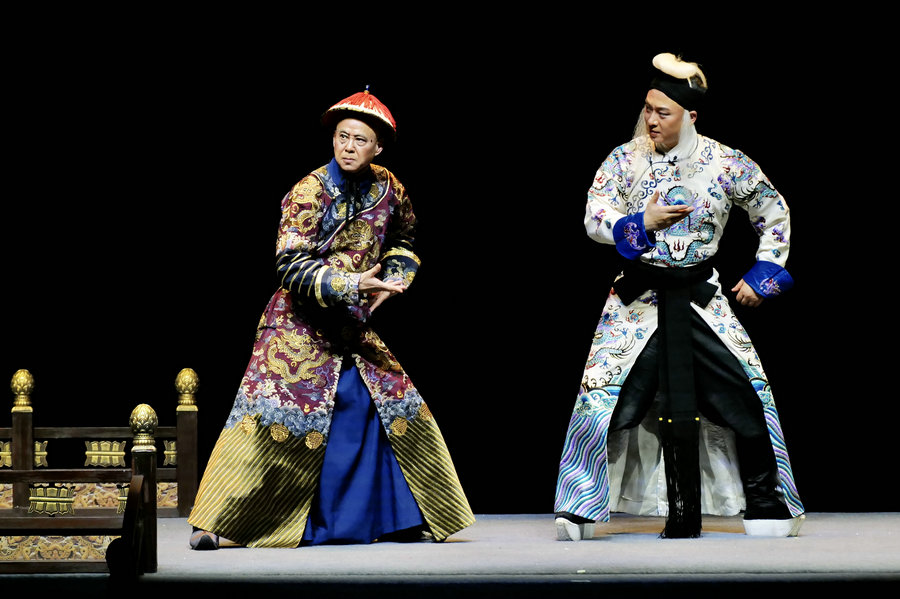
Tan Xinpei
Introduction
Tan Xinpei (1847-1917) was a celebrated Peking Opera master known for his significant contributions to the art form. Recognized for his innovative style and mastery, Tan played a crucial role in the development and popularization of Peking Opera during the late Qing Dynasty (1644-1911).
His career spanned several decades, during which he established the Tan school of Peking Opera, influencing numerous artists and shaping the aesthetics of the genre. Tan's legacy is remembered for his dedication to the art and the cultural impact he had on Chinese opera and theater.
Early Life and Education
Born in 1847, Tan Xinpei hailed from an era when traditional Chinese art forms were highly esteemed. From a young age, he was exposed to the rich cultural milieu of Peking Opera, which was a dominant form of entertainment and artistic expression in China. Tan's early education involved rigorous training in the various aspects of Peking Opera, including singing, acting and the unique stylized movements that characterize the genre. His formative years were marked by a deep immersion in the study and practice of this intricate art form, setting the foundation for his eventual mastery and innovation within the field.
Career
Tan Xinpei's career was marked by a series of groundbreaking achievements and performances that left a lasting imprint on Peking Opera. He became renowned not only for his exceptional talent but also for his innovative approach to traditional opera. Throughout his career, Tan Xinpei performed in numerous prestigious venues and was a favorite at the imperial court, where he often entertained the Qing Dynasty's elite.
Tan Xinpei's performances were characterized by a combination of technical precision and emotional depth. He was particularly known for his ability to convey a wide range of emotions through his performances, captivating audiences with his expressive face and powerful voice. Tan was adept at portraying a variety of roles, each with its own distinct personality and narrative arc. His interpretations of classic Peking Opera roles were widely acclaimed, and he was instrumental in popularizing several operatic pieces that have since become staples of the form.
In 1905, Tan starred in "The Battle of Dingjunshan", the first Chinese movie ever made, which was a recording of a Peking Opera performance with the same title. Tan's participation in this groundbreaking project highlighted his willingness to embrace new technologies and media, further cementing his status as a pioneering figure in Peking Opera.
Legacy and Influence
Tan Xinpei's legacy extends far beyond his lifetime, as his influence continues to be felt in the world of Peking Opera today. He is credited with laying the foundation for the Tan school, a unique stylistic approach to Peking Opera that emphasizes expressive performance and vocal technique. This school has been passed down through generations, with Tan's descendants continuing to perform and teach his methods.
Tan's contributions to the art form have been recognized as instrumental in the evolution of Peking Opera, shaping its development and ensuring its enduring popularity. His work not only preserved traditional elements of the opera but also opened up new possibilities for artistic expression, making him a cultural icon and a revered figure in Chinese theatrical history.








